



nobuy
CLCP14
LanguageENG
PublishYear2020
publishCompany
Princeton University Press
EISBN
9780691221663
PISBN
9780691011479
- Product Details
- Contents
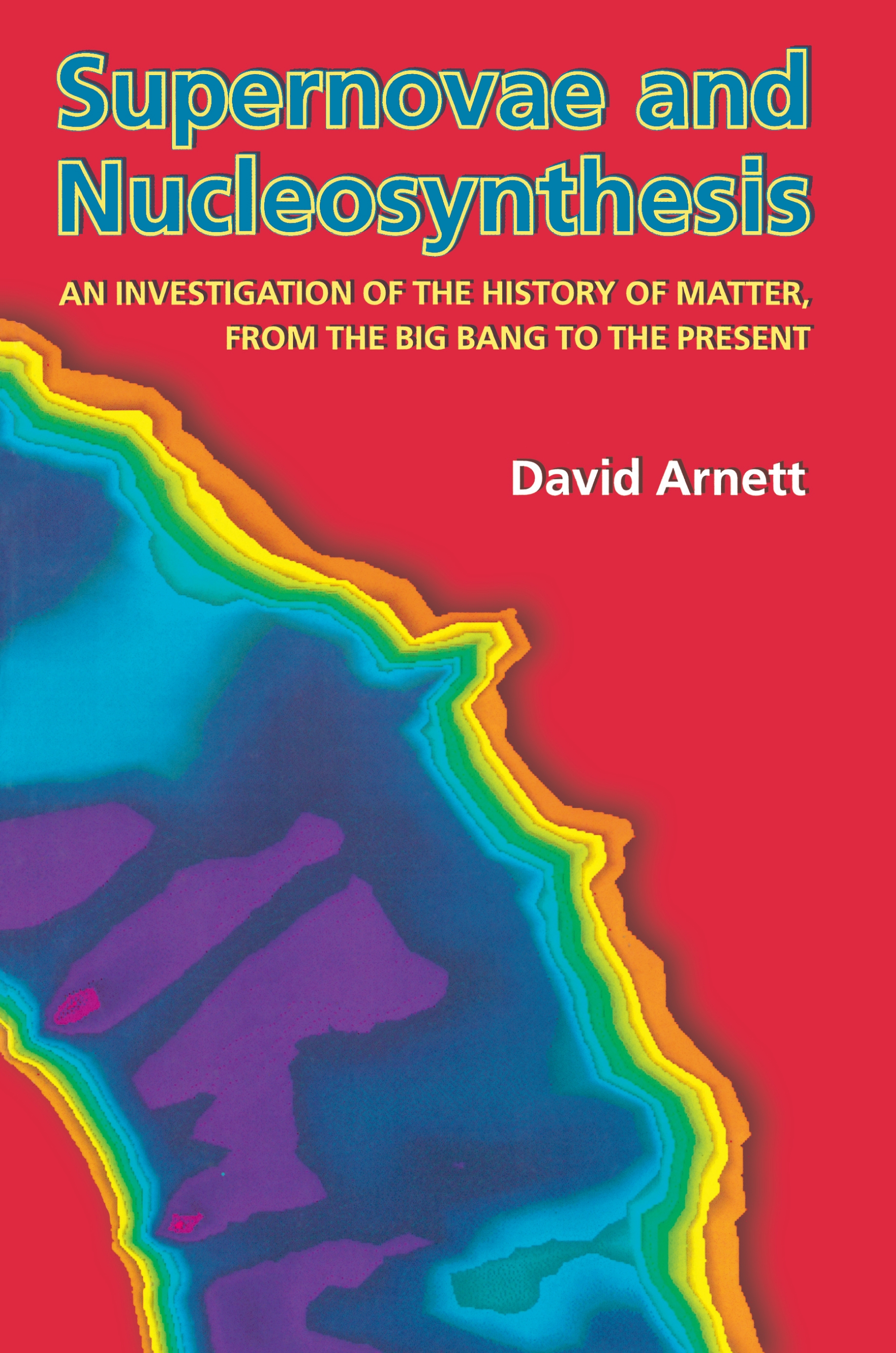
This book investigates the question of how matter has evolved since its origin in the Big Bang, from the cosmological synthesis of hydrogen and helium to the generation of the complex set of nuclei that comprise our world and our selves. A central theme is the evolution of gravitationally contained thermonuclear reactors, otherwise known as stars. Our current understanding is presented systematically and quantitatively, by combining simple analytic models with new state-of-the-art computer simulations. The narrative begins with the clues (primarily the solar system abundance pattern), the constraining physics (primarily nuclear and particle physics), and the thermonuclear burning in the Big Bang itself. It continues with a step-by-step description of how stars evolve by nuclear reactions, a critical investigation of supernova explosion mechanisms and the formation of neutron stars and of black holes, and an analysis of how such explosions appear to astronomers (illustrated by comparison with recent observations).
Collected by
- Yale University
- Princeton University
- Columbia University Library
- Stanford University
- MIT