



未购
中图号TS2
语种ENG
出版年2022
出版信息
WSPC
EISBN
9789811256592
PISBN
9789811255908
版次
- 介绍
- 目录
- 作者简介
- 推荐
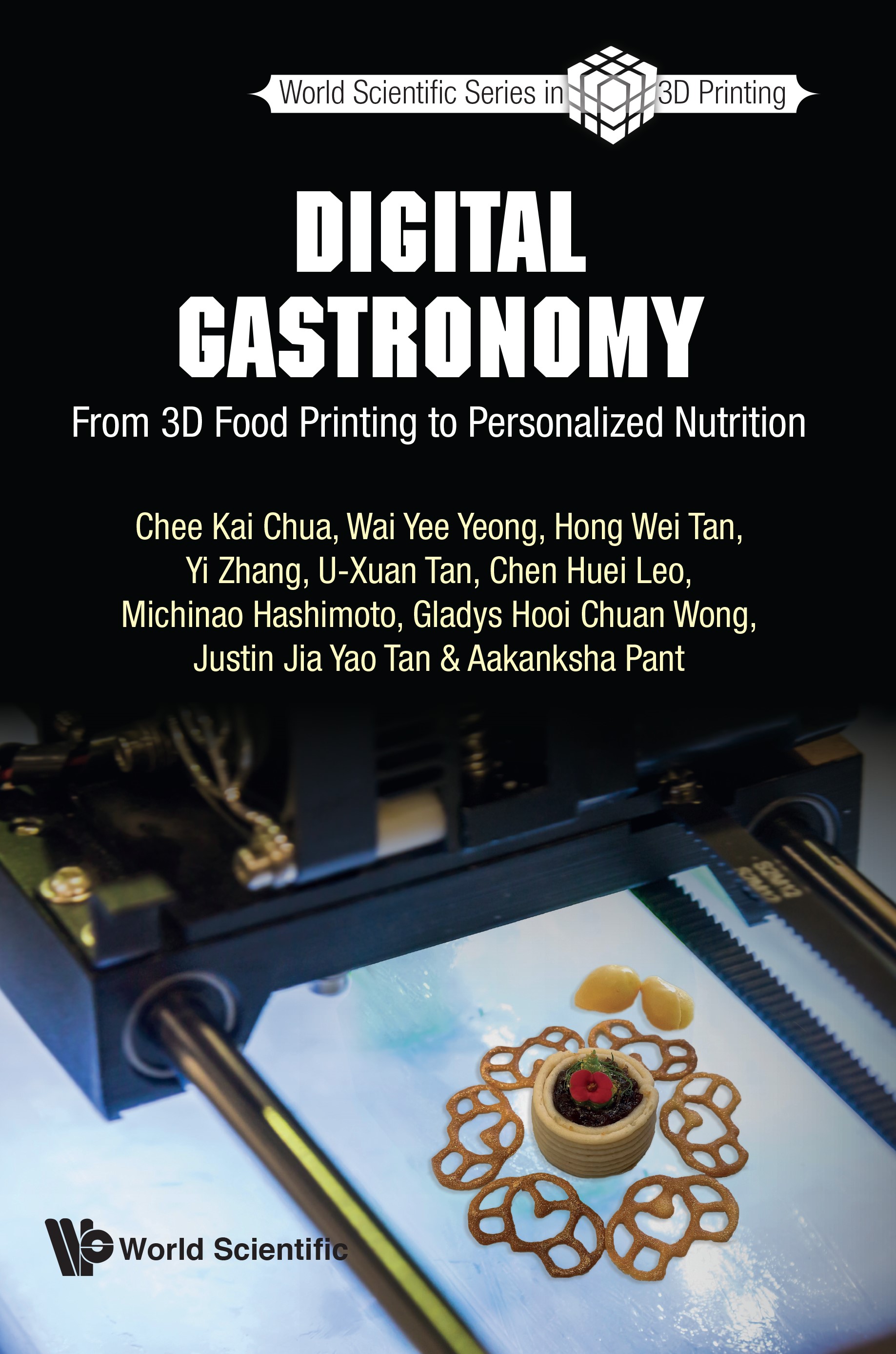
The food industry has seen many changes over the last several decades - new technologies have been introduced into the way we cook, manufacture, and present food products to consumers. Digital gastronomy, which combines new computational abilities such as three-dimensional (3D) printing with traditional food preparation, has allowed consumers to design and manufacture food with personalized shapes, colours, textures, and even nutrition. In addition to the personalization of food, 3D printing of food has other advantages such as promoting automation in food preparation and food sustainability through 3D-printed cell-based meats and alternative proteins. Entire meals can be constructed just by 3D food printing alone.In this textbook, the background, principles, commercial food printers, materials, regulations, business development, as well as the emerging technologies and future outlook of 3D food printing are explored. In terms of 3D-printed materials, four main classes are reviewed: namely, desserts / snacks (comprising dairy products, chocolate, sugars, and dough), fruits / vegetables, meats /alternative proteins, and pharmaceuticals / nutraceuticals.This textbook has been written to offer readers keen to learn more about 3D food printing in terms of concepts, processes, applications, and developments of 3D food printing. No prior knowledge is required. At the end of each chapter, a set of problems offers undergraduate and postgraduate students practice on the main ideas discussed within the chapter. For tertiary-level lecturers and university professors, the topic on 3D food printing can be associated to other subjects in food and nutrition, pharmaceutical and nutraceutical sciences, and food engineering.Related Link(s)
机构馆藏
相似图书